Roof Replacement Cost in Ireland
Free 2026 Calculator by Roof Type & County

Free 2026 Calculator by Roof Type & County
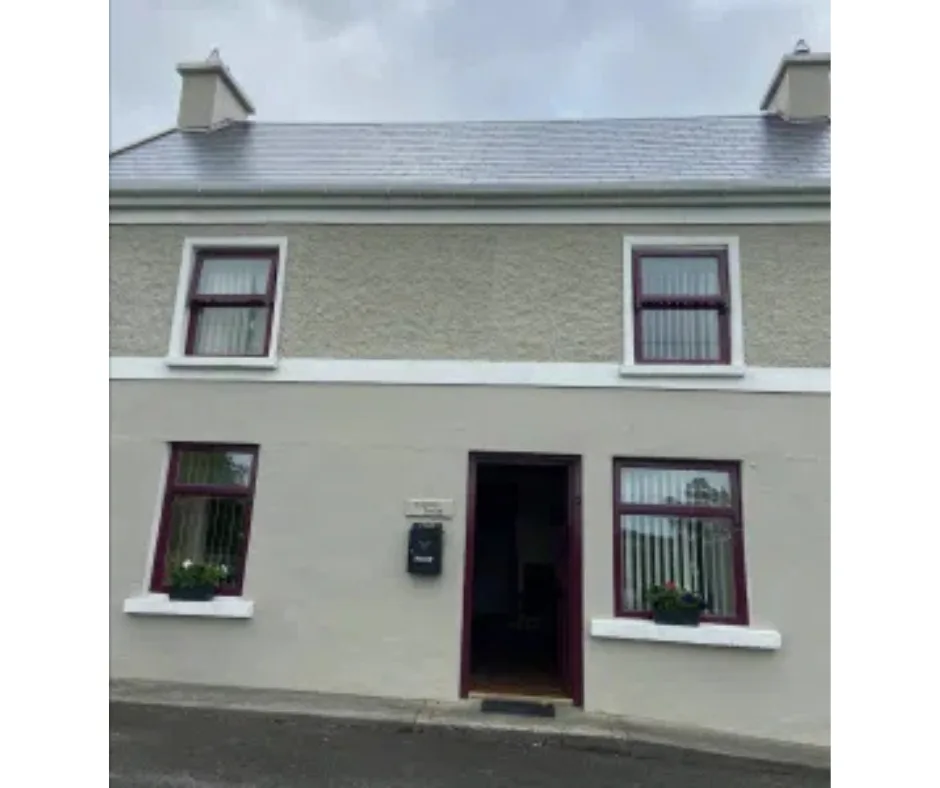
Slate roof replacement in Blanchardstown, Dublin.
Roof replacement is one of the largest single investments a homeowner makes, and the cost varies considerably depending on what covering you choose, the size and complexity of the roof, and where in Ireland you live. Access costs, scaffolding hire rates and tradesperson availability all move the price. The figures below come from our own published pricing for the areas we cover: Dublin, Cork, Limerick and Galway.
| Roof type | Indicative total (three-bed semi) | Notes |
|---|---|---|
| Concrete tile | €8,000-€18,000 | The volume choice; widely available, straightforward to install |
| Natural slate | €12,000-€28,000 | Period homes and longer-life applications; skilled labour required |
| EPDM flat roof | €90-€140 per m² | Extensions, dormers, garages; 25-35 year lifespan |
| GRP fibreglass flat roof | €90-€140 per m² | Hard-wearing; 25-30 year lifespan |
All figures are indicative 2026 ranges. VAT at 13.5% applies on top. Scaffolding, structural timber repairs and any internal making-good are priced separately once the roof is assessed. We do not recommend traditional torch-on felt for new flat roof work: EPDM and GRP both outlast it by a decade or more.
Where the deck itself has deteriorated, replacement adds roughly €30-€50 per m² on top of the membrane rate.
The biggest variables on any replacement job are:
Indicative 2026 price range in euro, VAT at 13.5% not included
A simple bungalow with a duo-pitch and no chimneys is the cheapest job on the list. A Victorian terrace with two chimney stacks, lead-lined valleys and original slate is the most demanding.
A written, itemised quote from a reputable contractor should cover all of the following:
If scaffolding appears as a separate, itemised line you can verify, that is a good sign. If it is buried in the total without explanation, ask. Customers are always welcome to source suitable scaffolding themselves if they can arrange it more cheaply; we do not insist on our own and we do not mark it up.
Concrete tile is the volume option across Ireland. It is widely available, straightforward to install and carries the lower end of the replacement price range at €8,000-€18,000 for a typical three-bed semi. It handles Irish rainfall well and suits the 1970s-2000s suburban housing stock that makes up the bulk of the repair and replacement market. For a home built in that period, like-for-like concrete tile is usually the sensible economic choice.
Natural slate costs significantly more: €12,000-€28,000 for a comparable roof. It requires skilled hand-nailing and a slater who knows the material. On period or protected properties, Georgian terraces in Cork city or Victorian red-brick in Dublin 6, natural slate is often the only appropriate covering, and in some Architectural Conservation Areas the local authority will not permit a change of material. For homes that will be kept long-term, the higher upfront cost is offset by a substantially longer service life.
The case study below shows what a full slate replacement involves when the roof is stripped back to the timbers.
EPDM is now the standard for flat and low-pitch work: extensions, dormers and garages. Installed at €90-€140 per m², it offers a 25-35 year lifespan and handles the wet-dry cycles of an Irish climate without cracking. It installs cold, with no blow-torch required. Where the existing deck is sound, a straight membrane replacement is straightforward. Where the deck has failed, add €30-€50 per m² for deck replacement.
GRP is similarly priced at €90-€140 per m² and gives 25-30 years of service. It is hard-wearing and handles foot traffic better than EPDM, which can matter on a dormer or accessible flat roof. The two systems are comparable in cost and lifespan; the choice usually comes down to the specific geometry and the installer's recommendation after seeing the roof.
We cover Dublin, Cork, Limerick and Galway. Pricing across those cities varies for practical reasons: scaffolding hire rates, labour availability and access all differ. The table below gives indicative ranges for a concrete tile re-roof on a typical three-bed semi in each area.
| Area | Indicative range (concrete tile, three-bed semi) | Notes |
|---|---|---|
| Dublin South | €13,500-€16,800 | Highest scaffolding costs; parking access constraints in some areas |
| Dublin North and West | €12,800-€15,900 | Similar labour rates, generally easier access |
| Cork city | €11,900-€14,500 | Good tradesperson supply; conservation area requirements in city centre |
| Limerick | €11,400-€13,900 | Competitive market; Georgian stock in Newtown Pery requires care |
| Galway | €11,700-€14,200 | Coastal exposure can require upgraded fixings; Atlantic weather a factor |
Coastal locations in Galway and along the Cork coastline can require stainless steel or silicon bronze fixings rather than galvanised, because salt-laden air degrades galvanised nails over time. Where that applies, it is identified at the quote stage and priced as a separate line.
A kitchen extension in Cork, 38 m², failed torch-on felt leaking into the ceiling below. The deck was inspected and found sound.
Total: €5,170 including VAT. This falls within the indicative EPDM rate of €90-€140 per m² for a 38 m² roof. Had the deck needed replacing, add €30-€50 per m² on top.
Every full roof replacement we carry out comes with a 10-year written workmanship guarantee and the Lifetime Leak Guarantee. Both are automatic: they do not require registration, they are not an upsell, and they are handed over in writing before contracts are signed. Our crews are directly employed; we do not subcontract, so the guarantee is backed by the same people who did the work.
On repair work the guarantee is a minimum of 3 years, up to 10 years on major repair work. See our customer reviews and case studies for completed jobs.
For more on insulation and ventilation alongside roofing work, see our guide to attic insulation and roof ventilation and the SEAI retrofit grants for 2026.
The right answer is not always replacement. A roof that is structurally sound with localised damage is usually a repair job. Replacement becomes the honest recommendation when the underlay and battens have failed across the whole roof, when the covering is past economic patch-and-fix, or when the age and condition mean a repair simply delays the inevitable at greater total cost.
Our guide on roof repair costs in Ireland covers the repair side in detail. Repair work is priced at €400-€2,500 for a standard leak repair, or €1,500-€8,000 for emergency storm damage work.
For a free, no-obligation written quote, contact us online or call the number for your city: Dublin 01 2657795, Cork 021 2040925, Limerick 061 788600, Galway 091 622895. We visit the property, measure the roof and provide a written, itemised price before any work begins.
Indicative ranges for a typical three-bed semi are €8,000-€18,000 for concrete tile and €12,000-€28,000 for natural slate. Flat roof replacements run €90-€140 per m² for EPDM or GRP. VAT at 13.5% applies on top of all figures. The only accurate number for your property comes after a free site visit.
Concrete tile is the lower-cost option for a pitched roof, at €8,000-€18,000 for a typical three-bed semi. For flat roofs, EPDM and GRP are similarly priced at €90-€140 per m². Traditional torch-on felt is cheaper upfront but we do not recommend it for new work because EPDM and GRP outlast it significantly.
Scaffolding is priced as a separate line item and only included where the job genuinely requires it: very high buildings, or buildings on busy streets where pedestrian protection is needed. It is never buried in the total. If you can source suitable scaffolding yourself at a better rate, you are welcome to do so.
No, not for a like-for-like replacement. Changing the roof profile, adding dormers, or altering the material or colour on a protected structure or in an Architectural Conservation Area does require planning permission. Check with your local authority if your home is in a conservation area.
Both work well in Irish conditions. Concrete tile is the more affordable choice upfront and is well suited to post-1970s suburban housing. Natural slate is the appropriate choice for period and protected properties, and is often required in conservation areas. The right answer depends on the age of your home, its setting and your budget.
Yes, in almost every case. EPDM has a 25-35 year lifespan and handles Irish wet-dry cycles well. Traditional torch-on felt is a shorter-life system and we do not recommend it for new flat roof work. The price difference between the two is relatively small when viewed over the roof's service life.
Every full roof replacement carries a 10-year written workmanship guarantee and the Lifetime Leak Guarantee. Both are automatic, no registration required, and are handed over in writing before contracts are signed. Repair work carries a minimum 3-year guarantee, up to 10 years on major repair work.
The roof covering itself is not directly grant-aided, but attic and roof insulation installed at the same time as a replacement can qualify for SEAI Better Energy Homes support. Timing insulation work to coincide with a re-roof makes practical sense because the scaffolding and access are already in place. Housing Aid for Older People can also contribute to roof repair costs for eligible homeowners.
VAT is 13.5% on roofing labour and materials for residential work. All indicative ranges on this page exclude VAT. A VAT-registered contractor should show VAT as a separate line on their written quote.
Repair is the right answer when the roof structure is sound and the damage is localised. Replacement is the honest recommendation when the underlay and battens have failed across the whole roof, or when the covering is past economic repair. A free inspection will give you a clear recommendation. Our roof repair cost guide covers the repair side in detail.
Yes, and you should insist on it. We provide a written, itemised, fixed-price quote after a physical site visit, at no charge and with no obligation. We cover Dublin, Cork, Limerick and Galway. Call the number for your city or use our contact page to arrange a visit.
Ask for CIRI registration, a VAT number and insurance certificates, and verify them. Ask whether the crew doing the work are directly employed or subcontracted. Ask for a written, itemised quote rather than a verbal or phone estimate. A contractor who is reluctant to provide any of these is telling you something.
Roof Repairs in Ireland. Free survey, written fixed-price quote, 10-year guarantee.